
Burns Night: A Celebration of Scottish Heritage
John Core, Sodexo Culinary Nutrition Lead
Held every year on January 25th, Burns Night honours Scotland’s beloved poet, Robert Burns, with an evening of poetry, music, and traditional food. This global tradition is a vibrant celebration of Scottish culture and cuisine.
Scottish cuisine
With its rich history, Scotland, is renowned for its distinctive ingredients and dishes. Rooted in a landscape of rugged coastlines, rolling hills, and fertile lands, Scottish culinary traditions are deeply intertwined with the country’s history and culture.
The earliest Scottish diet was simple, primarily comprising oats, dairy, wild game, and fruits. Oats, a staple, were consumed as porridge or oatcakes, providing a high-fibre, nutritious base to the diet. Dairy products from cows and sheep added essential fats and proteins. The abundance of wild game and fish contributed lean proteins, vital for physical health. This diet was minimally processed, high in essential nutrients, and low in sugar and saturated fats, laying a foundation for a robust diet.
The Agricultural Revolution brought changes, introducing new crops like potatoes and turnips. These root vegetables became central to the Scottish diet, offering vitamins C and B6, potassium, and fibre. The introduction of root vegetables diversified the diet, enhancing its nutritional value. The expansion of the fishing industry also played a crucial role, with herring and salmon becoming significant. These fish are rich in omega-3 fatty acids, crucial for heart health and cognitive function.
The Industrial Revolution led to urbanisation and a shift in eating habits. Preserved foods like canned meats and vegetables became more common. However, traditional dishes like haggis, made from sheep's offal, continued to provide a unique blend of protein, iron, and vitamins. The Scots also widely consumed dairy products, notably cheese, providing calcium and protein.
Today, Scottish cuisine combines traditional dishes with modern nutritional insights. There's a renewed interest in locally sourced, organic foods. Venison, a lean red meat high in protein and low in saturated fat, is popular. Scottish berries, like raspberries and strawberries, are rich in antioxidants, vitamins, and fibre. Oat-based dishes remain a staple, contributing to a diet high in whole grains.
Scotland's coastal waters offer a bounty of seafood, including mackerel and haddock, rich in omega-3 fatty acids. The country's whisky industry also contributes, albeit more culturally than nutritionally. The moderate consumption of whisky has been associated with certain health benefits, such as heart health, due to its antioxidant properties.
The Burns Night Banquet:
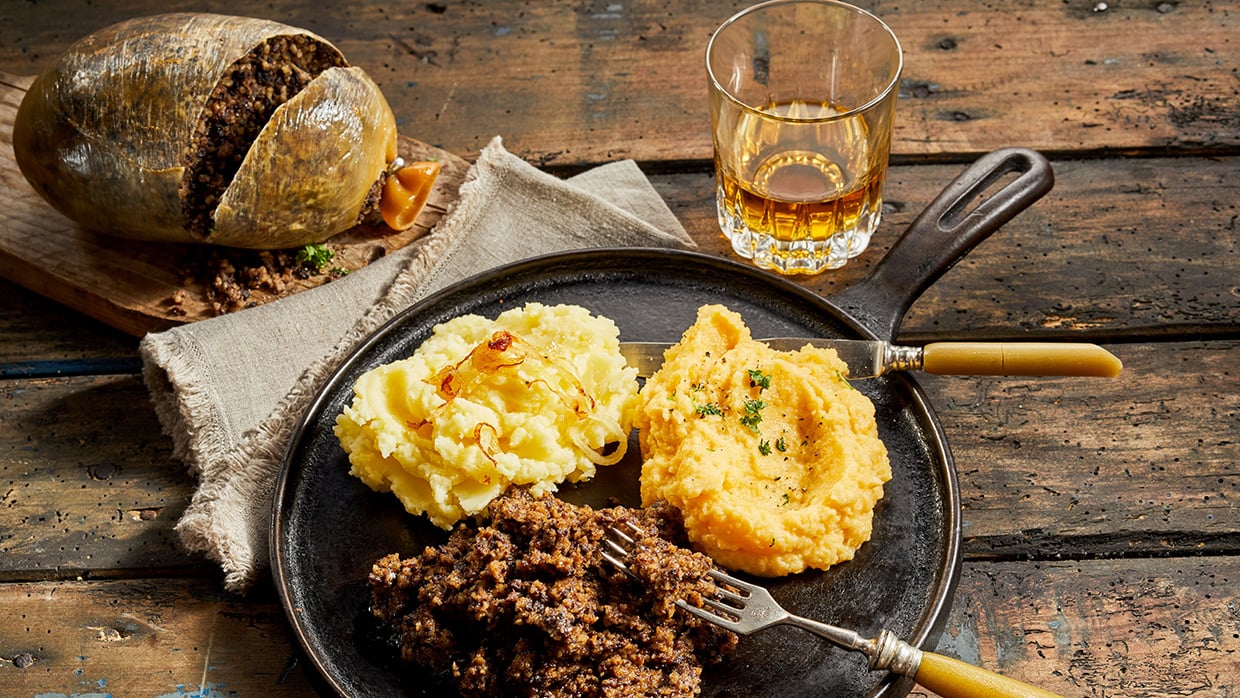
At the heart of Burns Night is a feast of iconic dishes, including haggis with neeps and tatties, smoked salmon, and the classic dessert Cranachan. Each dish reflects Scotland's rich culinary history and natural bounty, offering flavours that are both hearty and wholesome.
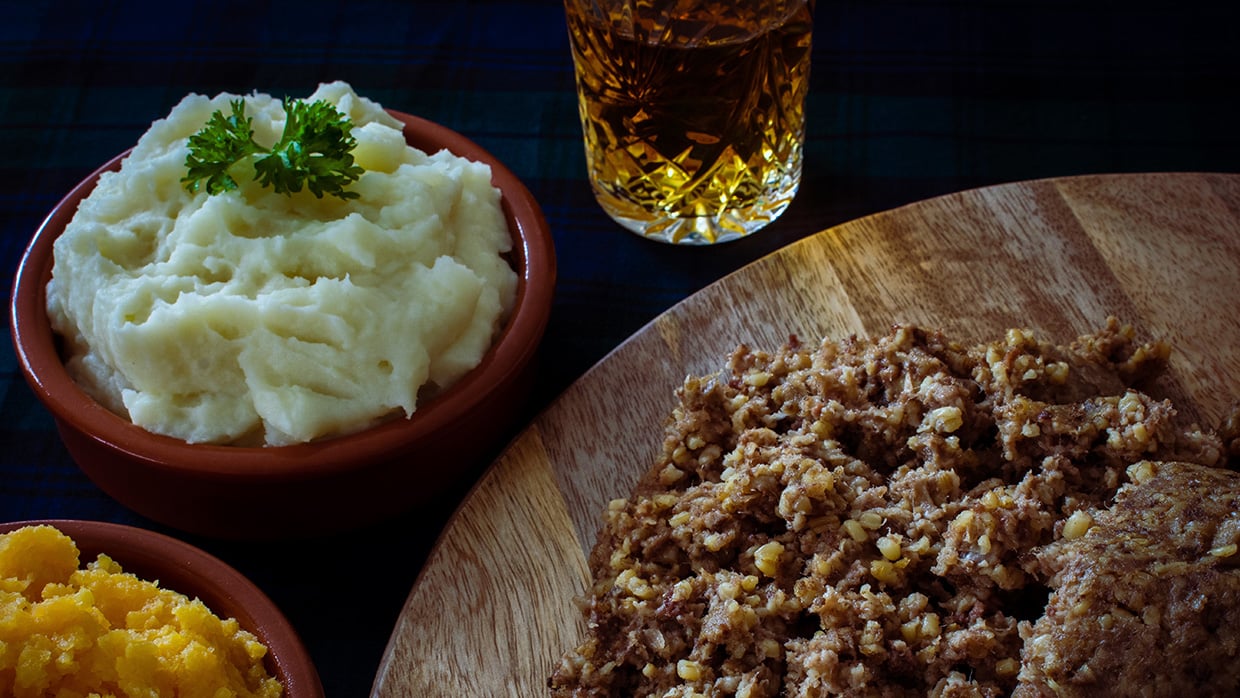
Haggis: Central to the Burns Supper, haggis is a savoury pudding containing sheep's heart, liver, and lungs, minced with onion, oats, suet, spices, and salt. It’s rich in protein and iron, essential for muscle health and energy levels. The oatmeal in haggis is a good source of fibre, aiding digestion.
Neeps (Turnips) and Tatties (Potatoes): These root vegetables are traditionally served with haggis. Turnips are low in calories and high in vitamin C, vital for immune health. Potatoes are a good source of potassium, vitamin C, and fibre, especially when eaten with their skin.
Scottish Smoked Salmon: Often served as a starter, Scottish smoked salmon is rich in omega-3 fatty acids, crucial for heart and brain health. It's also a great source of protein and vitamin D.
Cock-a-leekie Soup: A traditional soup made from leeks and peppered chicken stock, often containing rice or barley. Leeks are a good source of vitamins A and C, as well as iron and dietary fibre.
Cranachan: A dessert made from a mixture of whipped cream, whisky, honey, fresh raspberries, and toasted oatmeal. Raspberries are high in antioxidants and vitamins, while oats add fibre. The cream, though high in fat, offers some calcium.
Scotch Whisky: While not a health food, moderate consumption of whisky can provide antioxidants. However, it should be consumed responsibly.
In recent times, vegetarian and vegan versions of haggis have emerged, providing alternative options that are lower in fat and suitable for different dietary needs. These often use lentils, beans, and nuts, which are excellent protein sources and rich in fibre.
Scottish cuisine's history reveals a deep connection to its natural landscape and resources as showcased in a Burn’. The traditional Scottish diet, with its emphasis on whole grains, lean proteins, and fresh produce, offers numerous health benefits. Modern Scottish cuisine continues to evolve, integrating traditional ingredients with contemporary nutritional knowledge, offering a diet that is both culturally rich and beneficial for health.
Loading component...
Discover Recipes to Recreate the Magic
Whether hosting a Burns Night supper or exploring Scottish flavours, our recipes bring tradition to your table with a modern twist. From vegetarian haggis to smoked salmon salad and a lightened Cranachan, these dishes honour the essence of Burns Night while embracing a balanced approach to dining.