
Fire to Fork
Outdoor cooking boosts wellbeing. mindfulness, and healthier eating inspiring people to cook from scratch meals.
The phrase “mind–body connection” gets used everywhere. It sounds right, it feels instinctively true, and most people would agree with it without hesitation. But if you stopped and asked someone to explain exactly what that means, or more importantly, how to act on it through food, the answers would often fall short.
What we tend to see is a surface-level conversation. Short, polished snippets that reference stress, hormones, or the nervous system. They’re easy to consume and easy to agree with, but they rarely go far enough to be useful. You’re left with the sense that food affects how you feel, but without a clear understanding of how that actually works in practice.
From my culinary nutrition point of view, that gap matters. If the goal is to help people make better choices, the message has to be practical. It has to translate from science into everyday decisions. That means stepping away from general statements and focusing on clear, tangible links between the food we eat and how we think, feel, and function.
When you strip it back, the connection between the mind and the body doesn’t need to be complicated. You don’t need to understand every hormone or pathway to make sense of it. There is a simpler, more direct way to look at it, and it starts with understanding one system that we influence every single day.
Serves: 2-3
Prep Time: 10 minutes
Cook Time: 20 minutes
Ingredients:
Method:
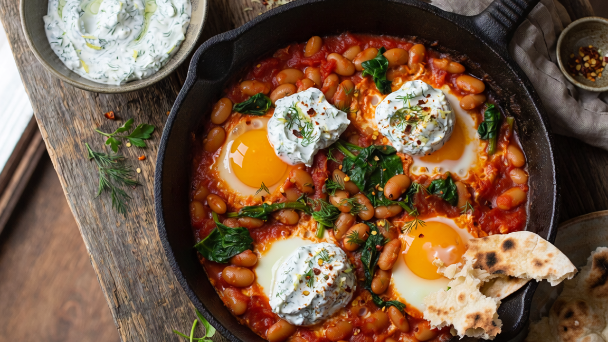
Heat the olive oil in a wide pan over a medium heat and soften the onion for a few minutes until translucent. Add the garlic and red pepper and cook for another 3–4 minutes to build flavour. Stir in the cumin, smoked paprika, and harissa, allowing the spices to toast gently before adding the chopped tomatoes.
Simmer the sauce for 8–10 minutes until slightly thickened, then fold in the butter beans and spinach, cooking until the spinach wilts. Season to taste, then make small wells in the sauce and crack the eggs in. Cover and cook gently until the eggs are set to your liking.
Mix the Greek yoghurt with lemon zest, herbs, and a pinch of salt. Spoon over the shakshuka, finish with a drizzle of olive oil and a scatter of toasted seeds, and serve straight to the table.
Tip:
Serve with wholegrain flatbreads or toasted sourdough. You can add aubergine or courgette for extra plant variety, or swap eggs for tofu if you want a plant-based version.
Serves: 2
Prep Time: 15 minutes
Cook Time: 20 minutes
Ingredients:
Method:
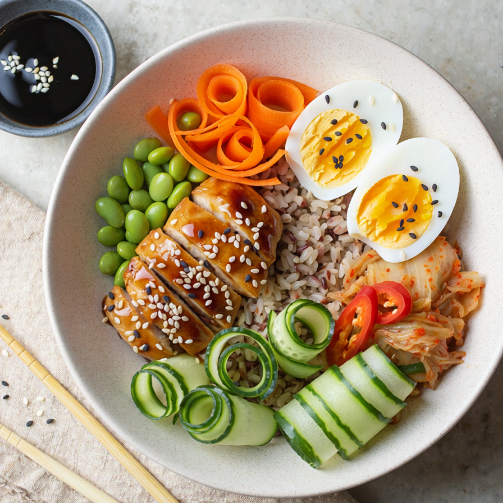
Cook the brown rice and quinoa together according to packet instructions, then stir through the lentils and seeds while still warm. Set aside.
Mix the gochujang, soy sauce, honey, garlic, ginger, and sesame oil to make a marinade. Coat the chicken well and cook in a hot pan or grill until fully cooked and lightly caramelised, then slice.
Prepare the vegetables and keep them fresh and crisp. Mix the lime juice, vinegar, sesame oil, and chilli flakes for a simple dressing.
Assemble the bowl by adding the grain base, then layering the vegetables, sliced chicken, and kimchi. Drizzle over the dressing. If using, top with a soft-boiled egg for extra richness.
Tip:
Swap chicken for tofu or tempeh for a plant-based version. The more variety of vegetables you add, the better for gut diversity.
Serves: 6-8
Prep Time: 10 minutes
Cook Time: 20 minutes
Ingredients:
Method:
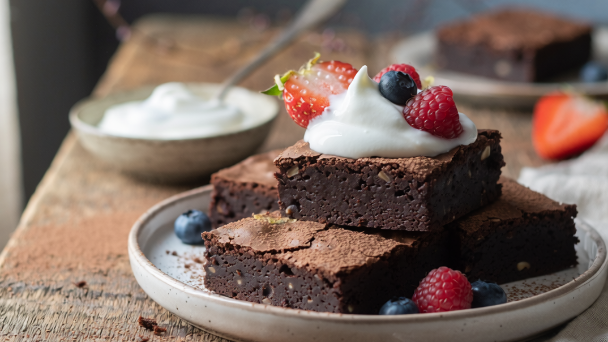
Preheat the oven to 180°C. Blend the bananas, oats, cocoa powder, maple syrup, peanut butter, baking powder, vanilla, and salt until you have a thick batter.
Fold through the dark chocolate, walnuts, and seeds, then transfer to a lined baking tin. Bake for 18–20 minutes until set but still soft in the centre.
Allow to cool slightly before slicing. Serve warm with yoghurt or kefir and fresh berries.
Tip:
Use almond butter or tahini for variation. This is best slightly underbaked for a softer, more indulgent texture.